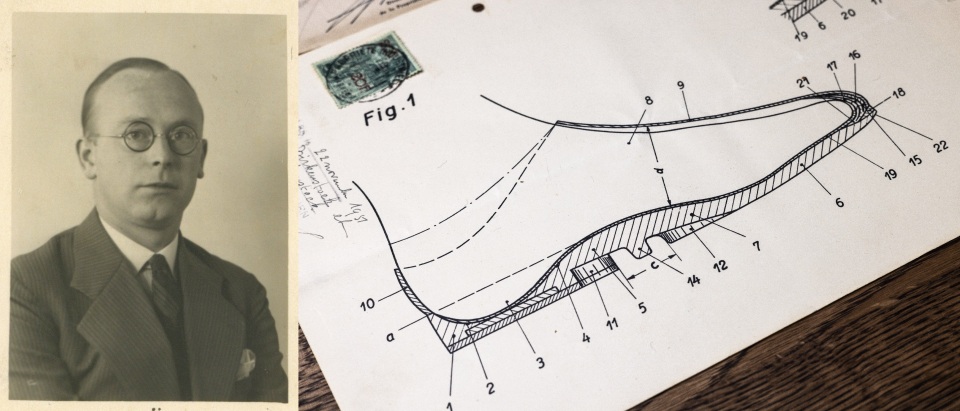
On the 1st of December, one of the most influential members of the Birkenstock family, Carl Birkenstock (1900-1982), would have celebrated his 125th birthday. Carl joined his father Konrad's business at a young age and took on responsibilities almost from the beginning. He shared Konrad's passion for foot health and soon took over his lecturing activities on the topic. Carl put his knowledge and observations into writing, publishing articles and books, his most popular work being Fußorthopädie - System Carl Birkenstock (1949). He coined the term "Naturgewolltes Gehen" (to walk as nature intended), which remains BIRKENSTOCK's credo to this day.
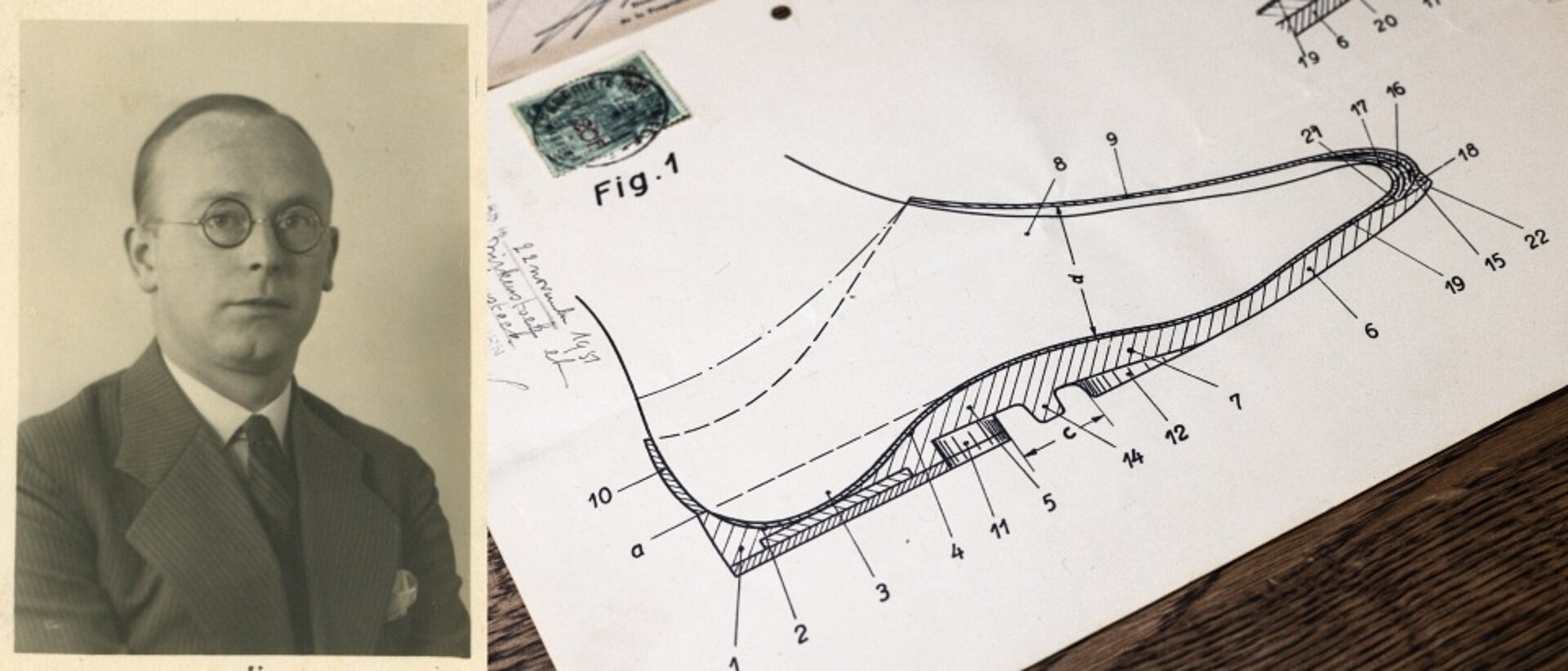
At the time, BIRKENSTOCK's main business focused on insoles, and Carl continued to improve and further develop his father's designs. However, his true passion project was the Ideal-Schuh (Ideal Shoe). Seeing every day how harmful improper footwear could be, he wanted to create the perfect shoe to counterthis unhealthy trend. Over several decades, Carl handcrafted hundreds of prototypes, and in the early 1950s he patented his designs in multiple countries. The next challenge was finding a way to mass-produce the Ideal Shoe. Carl wanted maximum customizability to adapt the shoe to each wearer as much as possible. He collaborated with different shoe manufacturers over the years to make it happen but in the end mass-production proved unfeasible.
Where others might have compromised their vision to create a marketable product, Carl Birkenstock refused to do so. Even though the Ideal Shoe never reached serial production, it remains an important chapter in BIRKENSTOCK's history and its roots in closed-toe footwear. Carl withdrew from the business in the early 1960s, handing the reins to his son Karl, devoting himself fully to his writings on foot health. Shortly afterward, Karl brought his father's dream to life, but with a slight twist: instead of a closed shoe, the first commercial BIRKENSTOCK shoe was a sandal, now known as the MADRID.